
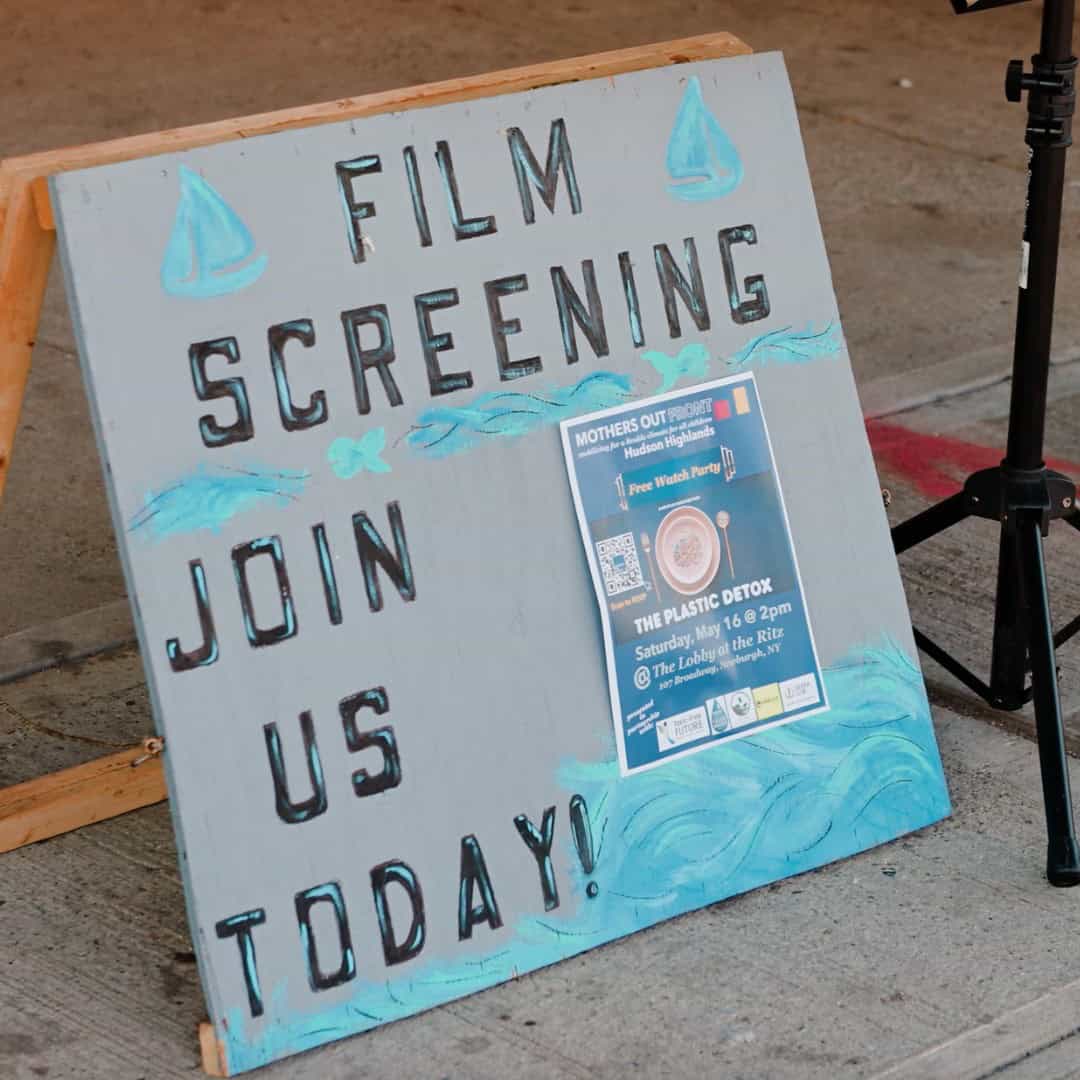
Last month, we partnered with Mothers Out Front, Toxic-Free Future, Newburgh Clean Water Project, C.E.A.C., and Sierra Club to support The Plastic Detox — a community screening of the Netflix documentary followed by a live panel discussion. We were proud to be there to film and edit the full event so this important conversation could reach a wider audience.
Did you know that plastic chemicals are wreaking havoc on our hormones — and even showing up in placentas and unborn babies? Following the screening, four experts took the stage to break it all down:
Assemblyman Chris Eachus – NY State Assembly
Mike Schade – Senior Director, Toxic-Free Future
Suzanne Barclay – Beyond Plastics
Lisa Mindich – Diagnostic Medical Sonographer, OB/GYN
From hormone disruption to fertility challenges, cancer, and heart disease — the science is clear. But so are the solutions. Here’s what we learned.
The problem is closer than you think
Microplastics have been found in placentas, amniotic fluid, arterial plaque, and breast milk. Lisa Mindich, a diagnostic sonographer who spent her career in obstetrics, noted that the hormonal sequence of early pregnancy is so precisely timed that even small disruptions from plastic chemicals can lead to growth restriction and malformation. “It’s every organ in our body,” she said.
The chemicals to know
Two culprits came up repeatedly: phthalates, used to soften PVC plastic found in flooring, shower curtains, and food packaging, and bisphenol A, which lines canned foods and coats thermal receipt paper. Both are endocrine disruptors. Both are largely unregulated at the federal level.
What New York could do
Assemblyman Eachus is a co-sponsor of the Packaging Reduction and Recycling Infrastructure Act (PREA), which would ban these chemicals in packaging, reduce packaging waste, and bring funding to municipalities for recycling. It has the votes — but hasn’t been brought to the Assembly floor. Over 100 corporations, including Amazon, PepsiCo, and Exxon, have lobbied against it. Call your assembly member and ask them to push Speaker Hastie to bring it to a vote.
Small steps that actually work
Don’t microwave food in plastic. Replace plastic cutting boards. Avoid canned foods when possible. Skip the paper receipt. Look for “fragrance” on personal care labels — it often means phthalates. Washington State banned certain flame retardants and saw levels in breast milk drop 70%. Individual choices add up.
The bottom line
“It’s not too late,” Assemblyman Eachus told the crowd. The science is clear, the legislation exists, and the public pressure works. Start with one change at home, and make one phone call to Albany.
Video by Matt Barootijan
For more, visit toxicfreefuture.org.
This post is also available in: